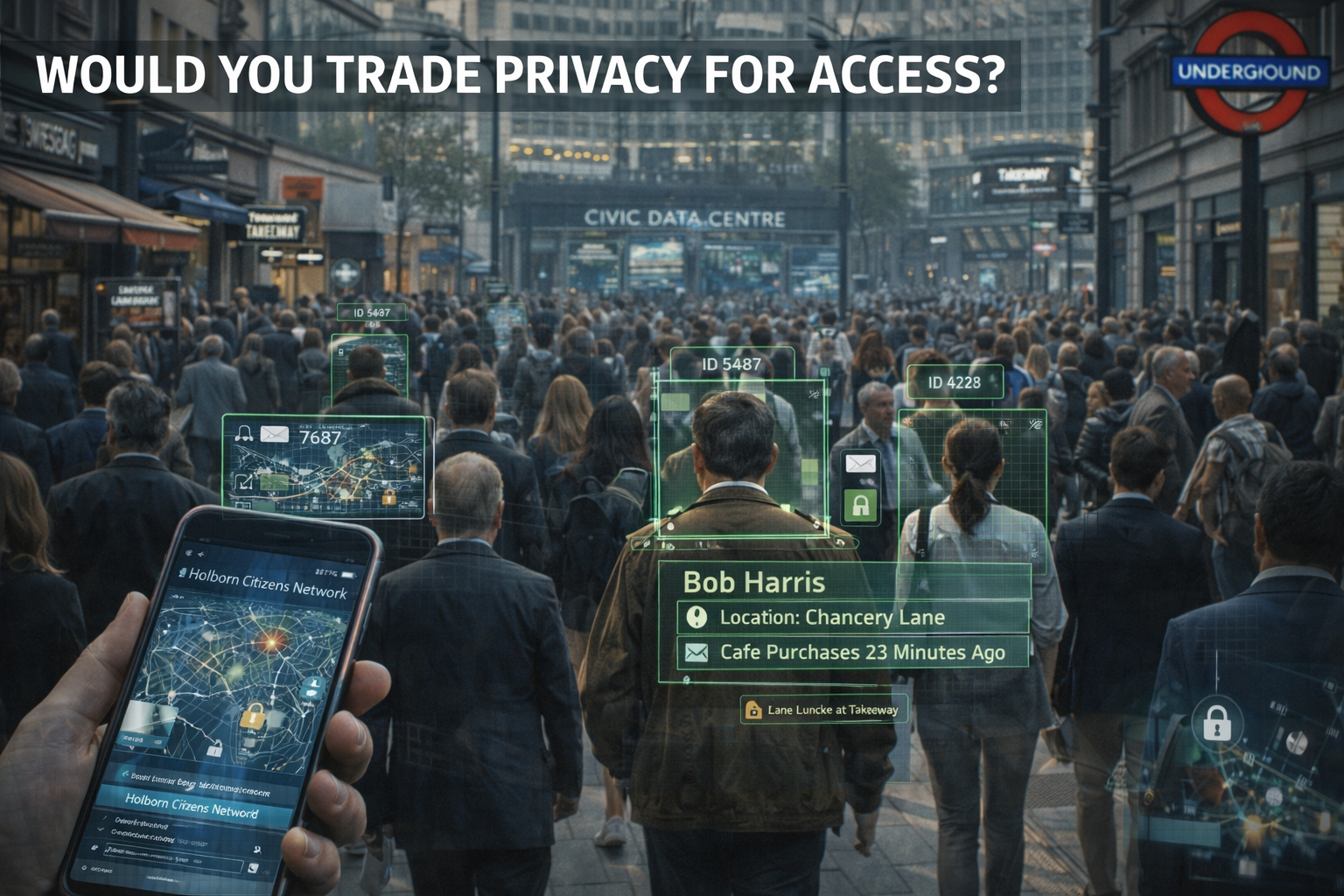
Civic Data Centre expansion
More of the city’s systems are being linked through a central data hub.

Image taken by Gemini
More of the city’s systems are being linked through a central data hub.

Humanoid robots have been making their way into home
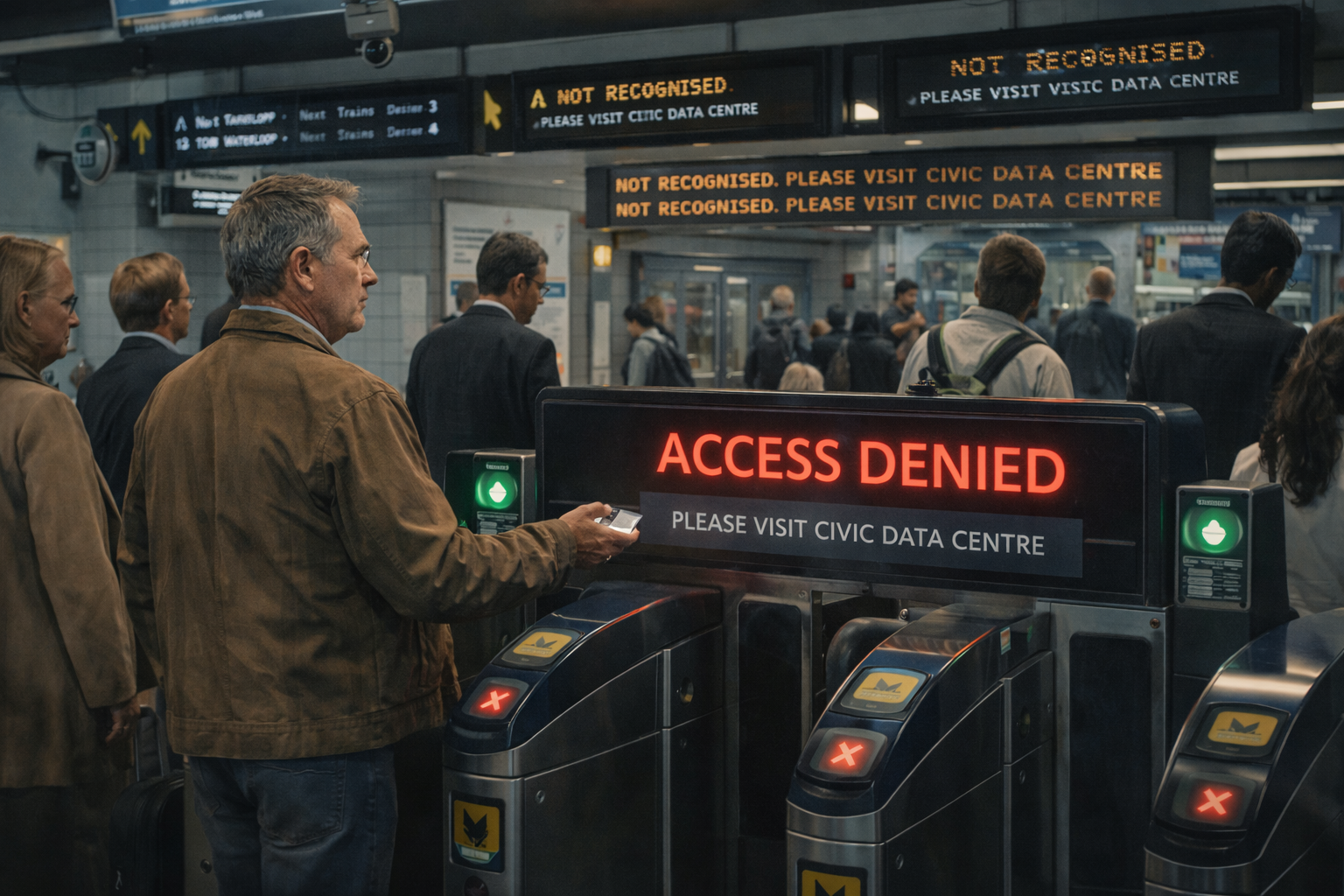
Your data profile increasingly determines what services you can use.
In Holborn, everyday technologies like CCTV cameras, travel cards, phone location data, and contactless payments are no longer separate systems. They are being combined into one connected network that tracks movement, behaviour, and presence in real time. Access to transport, shops, workplaces, and public spaces increasingly depends on being recognised by this system.
Holborn is already full of surveillance and data collection due to its transport hubs, offices, universities, and tourist flow. Places like Holborn Station, Chancery Lane, busy cafés, and retail streets become data checkpoints rather than neutral spaces. The Civic Data Centre becomes a key landmark where people manage their digital identity, not just their physical one.
1. The Trend Continues - If data-driven access continues, Holborn becomes fully automated. Transport barriers, shops, and even buildings respond instantly to your data profile. Safety increases and services become faster, but freedom becomes conditional. Privacy becomes a paid or restricted option, and people who opt out risk being excluded from everyday life.
2. The Trend Stops - If the trend stops now, systems are separated again. People regain anonymity in public spaces, and access is no longer tied to constant tracking. However, some safety features and conveniences disappear. Holborn becomes less efficient but more open, with public space truly public again.
3. The Trend Mutates - The trend could evolve into a more transparent and ethical system. Instead of constant tracking, people might control when and how their data is used. Temporary or situational access replaces permanent surveillance. Holborn could become a test space for shared control rather than top-down monitoring.
This trend raises serious ethical questions around privacy, equity, and power. Who benefits? Authorities, businesses, and people who are comfortable being tracked. Who loses? Those who value privacy, lack digital access, or fall outside the system. What becomes automated? Movement, access, decision-making. What gets worse? Inequality, exclusion, and loss of anonymity. In Future Holborn, privacy is no longer a default—it is a choice with a cost. The city becomes safer and more efficient, but also more controlled, forcing people to decide how much of themselves they are willing to give up just to belong.
Related Articles here: